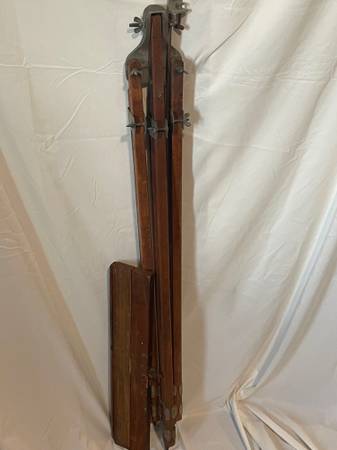
The company traces its origins to 1754 in New York selling paint. Following a century of assorted owners and partnerships, in 1848 C. T. Raynolds became a co-owner. In 1852 he made F. W. Devoe a partner and their company became Raynolds & Devoe Company. They parted ways in the 1870s, but in 1892 partnered again as F.W. Devoe & C.T. Raynolds Company.
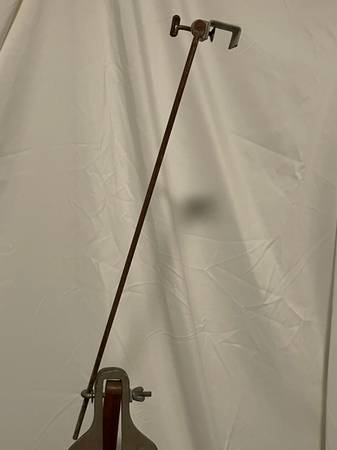
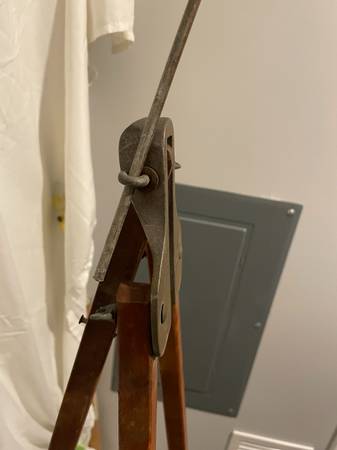
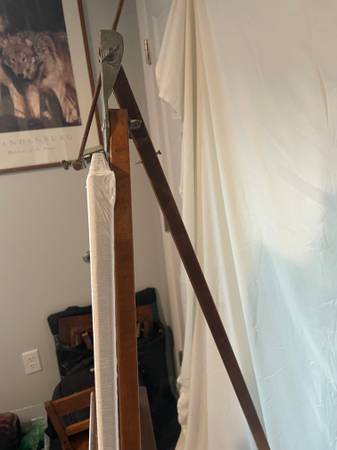
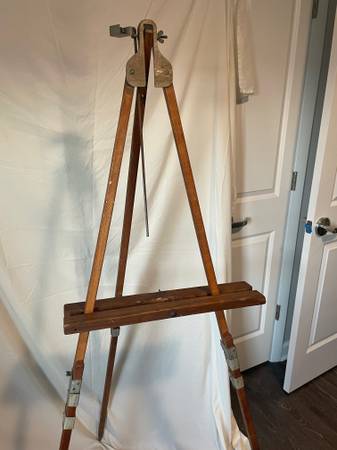
No. 29. — Folding Sketching, each leg made to slide in three parts for adjusting easel on uneven ground. Brass braces and screws, nickel plated tilting device, which permits canvas to be inclined at any desired angle, and can be adjusted for sitting or standing position. No bother with pins or trays in regulating height of canvas. The clamps can be adjusted to any position on front legs, and are fitted with a special contrivance to hold canvas securely. 5 feet 5 inches high; folds to 40 inches.
The metal pointed tips at the end of the tripod legs are called
spikes or pointed feet.
Their primary purpose is to provide stability and grip on various types of terrain where rubber feet might slip, such as:
• Soft or loose ground: They can be driven into grass, dirt, sand, or mud to firmly anchor the tripod, preventing it from slipping or sinking.
• Slippery surfaces: On ice, snow, or even some rocky surfaces, the sharp points dig in to prevent the tripod from sliding, ensuring a stable base for your equipment.
"what is this bracket for"?
This bracket is likely part of a vintage laboratory retort stand.
"who was the notable manufacturer" ?
The notable manufacturer associated with the type of antique wooden easel pictured is
Devoe & Raynolds Co..
Additional Information:
• Devoe & Raynolds Company has a long history, tracing its origins back to 1754 as a paint business in New York City.
• They were renowned manufacturers of artists' materials, including easels, paints, and varnishes, particularly prospering in the late 1800s and early 1900s.
• The company was eventually acquired by Celanese Corp. in 1964 and later by Grow Group, Inc. in 1976.
What are distinguishing features of Devoe & Raynolds easels?
An early 20th-century "Wood Folding Artist Studio Easel by Devoe & Reynolds Co Inc" like the one pictured can have a notable value, particularly among collectors of antique art supplies or industrial design.
Estimated Value Range:
• Based on similar listings found on sites like 1stDibs, a "Wood Folding Artist Studio Easel by Devoe & Reynolds Co Inc" has been offered for around $1,450.
• Other antique and vintage easels on 1stDibs and Chairish can range from several hundred dollars to over a thousand, with some high-end examples reaching several thousands depending on rarity and condition.
Factors Influencing Value:
1. Condition: The easel's condition, including any structural damage, wear and tear, or remnants of paint, can impact its value. A well-preserved piece, even with signs of use like paint drippings, can be desirable as it tells a story.
2. Completeness: Whether all original parts and mechanisms are intact and functional is important. Being a folding model, the ability to fold flat as designed adds to its authenticity and potential value.
3. Rarity and Provenance: While Devoe & Reynolds easels are known, specific models or those with documented histories (e.g., used by a notable artist) could fetch higher prices.
4. Market Demand: The current market for antique art supplies and industrial furniture also plays a role in determining demand and thus, value.
In summary, while a "Wood Folding Artist Studio Easel by Devoe & Reynolds Co Inc" from the early 20th century could be valued in the range of several hundred to over a thousands dollars, the specific condition and market context are crucial for a precise valuation.
Place of Origin USA
Period - early 20th
Date of Manufacture est 1917
Condition - very good